Shed Some Light
On The Brain.

NeuroThera pioneers transcranial photobiomodulation — delivering near-infrared laser light directly to targeted brain regions to treat the neurological conditions that disable hundreds of millions worldwide.

Explore the Platform Clinical Evidence
scroll

NeuroThera uses science, research, and innovation to pioneer the application of light energy in the treatment of neurological conditions — building the world's first clinical-grade transcranial photobiomodulation platform.

A Crisis Measured
in Trillions

Neurological and psychiatric conditions represent the most devastating — and most underfunded — disease categories in medicine. These are not rare diseases. They are the leading drivers of human disability, economic loss, and premature death worldwide.

Major Depressive Disorder
Depression
$382B
Annual U.S. Economic Burden (2023 USD)
280 million people affected worldwide
Leading cause of disability globally; #1 contributor to DALYs among mental health conditions
30–50% of patients fail first-line antidepressants
274.8M new cases identified globally in 2019 — a 59% increase since 1990
Alzheimer's Disease
Alzheimer's & Dementia
$243B
Annual U.S. Economic Burden
55 million people live with dementia globally; projected 78 million by 2030
7.2 million Americans currently affected; 8.5M projected by 2030
No disease-modifying therapy stops or reverses cognitive decline
Family caregiving costs exceed $230B annually in the U.S. alone
Parkinson's Disease
Parkinson's Disease
$61.5B
Annual U.S. Economic Burden
11.77 million cases worldwide; projected to reach 25 million by 2050
1.2 million Americans currently living with PD; 90,000 new diagnoses annually
Cases set to double within a generation driven by global aging
Current therapies manage symptoms only — no neuroprotective treatment exists
Traumatic Brain Injury
TBI & Concussion
$50B
Annual U.S. Economic Burden
2.87 million ED visits annually; 69,473 TBI-related deaths (2021)
3.2–5.3 million Americans living with long-term TBI-related disability
18.2% of U.S. adults have experienced a TBI with loss of consciousness
Zero FDA-approved pharmacotherapies for TBI recovery exist today
Stroke & Neurorehabilitation
Post-Stroke Recovery
$56.5B
Annual U.S. Economic Burden (2019–2020)
795,000 strokes annually in the U.S.; ~7.6 million survivors living with disability
Incident strokes increased 70% over the past three decades
87% of all strokes are ischemic — majority survive with significant rehabilitation need
Current neurorehabilitation options are severely limited in access and efficacy
>$793B

Combined Annual U.S. Economic Burden Across NeuroThera's Five Target Indications

These five conditions — MDD, Alzheimer's, Parkinson's, TBI, and Stroke — collectively account for nearly $800 billion in annual U.S. economic losses. NeuroThera's tPBM platform is uniquely positioned across all five through a single, validated, non-invasive mechanism of action.

The Solution

A Multi-Indication
Neuromodulation Platform

NeuroThera's transcranial photobiomodulation (tPBM) system is not a single-indication device — it is a platform. One mechanism of action, one device architecture, multiple neurological indications. This is the first time a safe, non-invasive brain stimulation technology has demonstrated multi-indication potential across validated imaging biomarkers.

🧠

One Platform, Five Indications

A single near-infrared laser device configurable for MDD, Alzheimer's, Parkinson's, TBI, and post-stroke rehabilitation — dramatically reducing development cost per indication.

🔬

Biologically Validated Mechanism

tPBM activates mitochondrial cytochrome c oxidase in neurons, producing dose-dependent changes in cerebral blood flow, metabolism, and cortical activity — confirmed across BOLD fMRI, FDG-PET, and EEG simultaneously.

No Systemic Side Effects

Unlike drugs, tPBM acts locally on targeted brain regions with zero serious adverse events across all clinical trials to date. No polypharmacy. No titration. No systemic toxicity.

🏥

Clinic-Ready, Portable Form Factor

No dedicated treatment room required. Sessions run 5–15 minutes, 2–3× per week. Designed to deploy in mental health clinics, neurology practices, and primary care settings without infrastructure investment.

Major Depressive Disorder

Lead

Alzheimer's Disease

Active

Parkinson's Disease

Active

Traumatic Brain Injury

Pipeline

Stroke & Neurorehabilitation

Pipeline
Technology

How Transcranial
Photobiomodulation Works
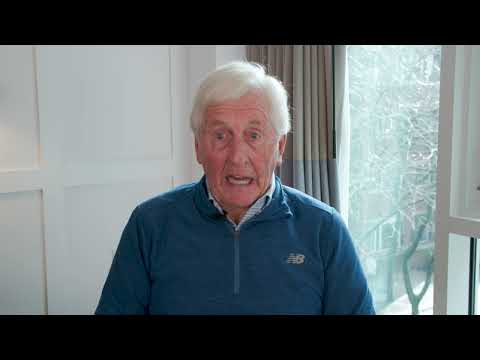
See the Technology Applied — Harvard/MGH

How Transcranial Photobiomodulation (tPBM) Works Watch on YouTube ↗
1

Photon Penetration

Near-infrared wavelength — specifically selected for optimal tissue penetration — passes through scalp and skull to reach targeted cortical regions without heating tissue.

2

Mitochondrial Activation

Photons are absorbed by cytochrome c oxidase (CCO) in neuronal mitochondria, triggering enhanced ATP production, reduced oxidative stress, and restored cellular energy metabolism.

3

Cerebral Blood Flow Modulation

Dose-dependent changes in regional cerebral blood flow are confirmed by BOLD fMRI. Effects extend globally — beyond directly irradiated regions — via neural network connectivity.

4

Metabolic Enhancement & Neuroplasticity

FDG-PET imaging confirms increased glucose uptake in prefrontal cortex. Enhanced synaptic function and neuronal connectivity in mood-regulating circuits support lasting clinical benefit.

Clinical Validation

Rigorously Proven.
Triple-Validated.

NeuroThera's tPBM technology has been evaluated in multiple NIH-funded clinical trials at Harvard/MGH, NYU, and international sites — producing results that exceed existing neuromodulation benchmarks with an exemplary safety profile.

Harvard Medical School and MGH
Harvard Medical School · Massachusetts General Hospital
NYU School of Medicine
NYU School of Medicine · NYU Langone Medical Center
Nathan S. Kline Institute
Nathan S. Kline Institute for Psychiatric Research
Peruvian Clinical Research
Peruvian Clinical Research · Lima, Peru
🏆

Industry-First: Triple Biomarker Validation

NeuroThera is the only transcranial photobiomodulation company in the world with clinical efficacy independently validated across three simultaneous imaging biomarkers — making our evidence package unprecedented in the tPBM field.

BOLD fMRI · Cerebral Blood Flow FDG-PET · Cerebral Metabolism EEG · Cortical Activity Zero Serious Adverse Events
Why NeuroThera

The Competitive Advantage

💡

Laser vs. LED

NeuroThera uses a coherent laser — not LED panels. Laser delivers consistent, high-power-density energy to precisely targeted brain regions. LED competitors cannot match tissue penetration depth or reproducibility.

📊

NIH-Validated Science

Over $10 million in NIH and Gates Foundation non-dilutive grants provides government-level validation of scientific merit — something no competitor in the tPBM space can claim at this scale.

⚖️

22 Issued Patents

20 U.S. patents and 2 Japanese patents covering transcranial photobiomodulation applications, with 13+ applications pending — creating a durable IP moat across indications and device configurations.

🌐

Multi-Indication Design

One device. Five indications. The platform architecture was designed from inception to address multiple neurological conditions — accelerating time-to-market for each subsequent indication after FDA clearance.

By the Numbers

Evidence You Can Count On

$10M+
NIH & Gates Foundation
Grant Funding
22
Issued Patents
(20 U.S. · 2 Japan)
4
Completed or Active
Clinical Trials
0
Serious Adverse Events
Across All Trials
3
Independent Imaging
Biomarkers Validated
5
Target Neurological
Indications
Leadership

The Team Behind
the Science

NeuroThera combines deep clinical expertise, regulatory experience, and commercial execution capability — with direct ties to the physicians conducting the science.

PN

Paul Nielsen

Chief Executive Officer
Senior technology and healthcare executive with 25+ years of leadership across life sciences, AI, and value-based care. At UnitedHealth Group, generated $1.4B+ through strategic partnerships and next-generation care delivery. Former CEO of Proxim; took SeaChange International from startup to IPO in 3.5 years.
LT

Luis De Taboada

CTO & Co-Founder
Globally recognized authority in transcranial laser therapy. Former VP R&D at PhotoThera. Holds extensive tPBM patent portfolio.
DH

Dallas C. Hack, MD

Chief Scientific Officer
Veterans & Military Affairs
COL (Ret.), USA. Concussion specialist with extensive military medicine experience in TBI research and neuromodulation treatment.
RB

Rhonda Robinson Beale, MD

Chief Medical Officer
Payer & Provider Affairs
30+ years healthcare executive. Former SVP & Deputy CMO at UnitedHealth Group. Expert in payer strategy and coverage policy.
ER

Eric Rock

VP Quality, Regulatory & Compliance
Medical device quality and FDA regulatory expert. ISO 13485 and FDA submission experience at B&W Tek Medical.
DM

Doug Mayer

VP Sales & Marketing
15+ years in photobiomodulation commercialization. Built LiteCure's commercial teams and drove category adoption across the therapeutic laser market.

Key Opinion Leaders & Scientific Advisors

Founders recognized as global experts in photobiomodulation, healthcare transformation leaders, and the principal investigators behind our clinical program.

PC

Paolo Cassano, MD, PhD

Principal Investigator · Harvard/MGH
Assistant Professor of Psychiatry, Harvard Medical School. Director, Brain Photobiomodulation Clinic at MGH. PI on TRIADE Phase I & II trials.
DI

Dan Iosifescu, MD, MSc

Clinical Collaborator · NYU
Professor of Psychiatry, NYU Grossman School of Medicine. Director, Clinical & Translational Neuroscience, Nathan Kline Institute. Co-investigator on TRIADE trials.
BP

Brian Pryor, PhD

Co-Founder & Director
CEO of BWTek Medical. LiteCure founder and CEO; founded 5 medical device companies. Fellow and Board Member of ASLMS.
SW

Sean Wang, PhD

Co-Founder & Director
Founder of B&W Tek. Fellow of OSA, SPIE, and ASLMS. Holds 60+ patents in optical instruments and medical devices. Serial entrepreneur.
GC

Garry Choy, MD, MBA

Advisor · UnitedHealth Group
Chief Clinical Transformation Officer, UnitedHealth Group. Expert in healthcare system innovation, AI-driven clinical workflows, and value-based care implementation.
JA

Juanita Anders, PhD

Scientific Advisor · USU
Professor at Uniformed Services University. Leading NIH-funded researcher in photobiomodulation and neural tissue repair. Pioneer in laser therapy applications for the nervous system.

Ready to Learn More?

Whether you are a clinician, investor, health system leader, or research partner — we want to connect. NeuroThera is building the future of non-invasive brain therapy.

Contact: info@neurothera.com